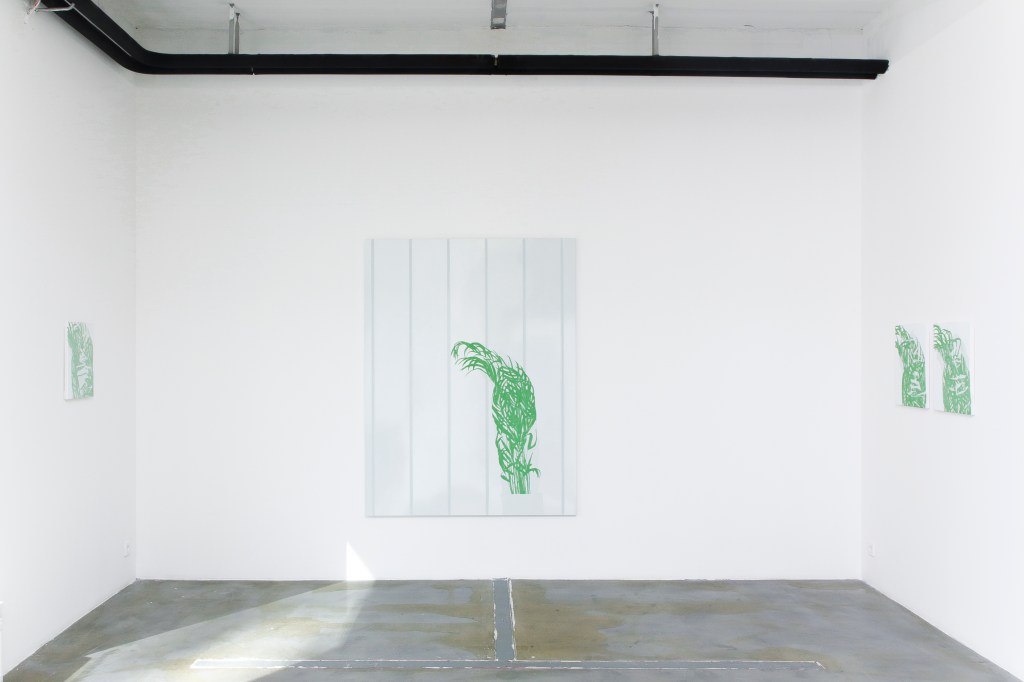
Nina Čelhar, Still (Waiting) Life, 2023, RAVNIKAR, Ljubljana, SI
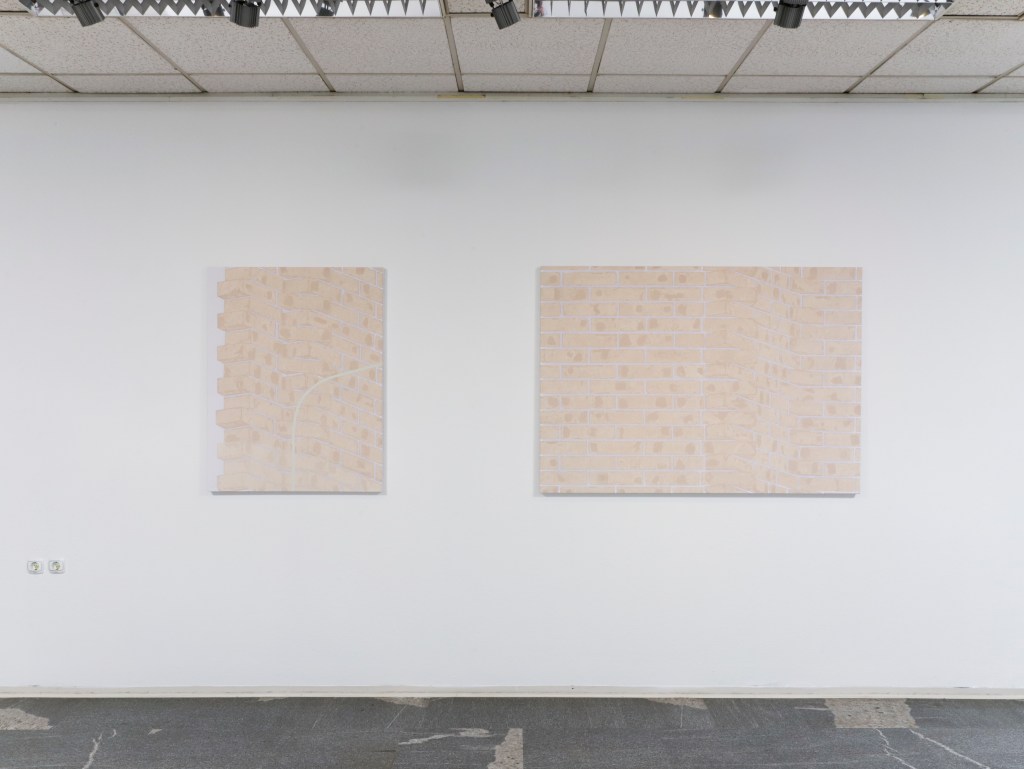
EDVARD, 2023, Small Gallery, Cankarjev dom, Ljubljana, SI
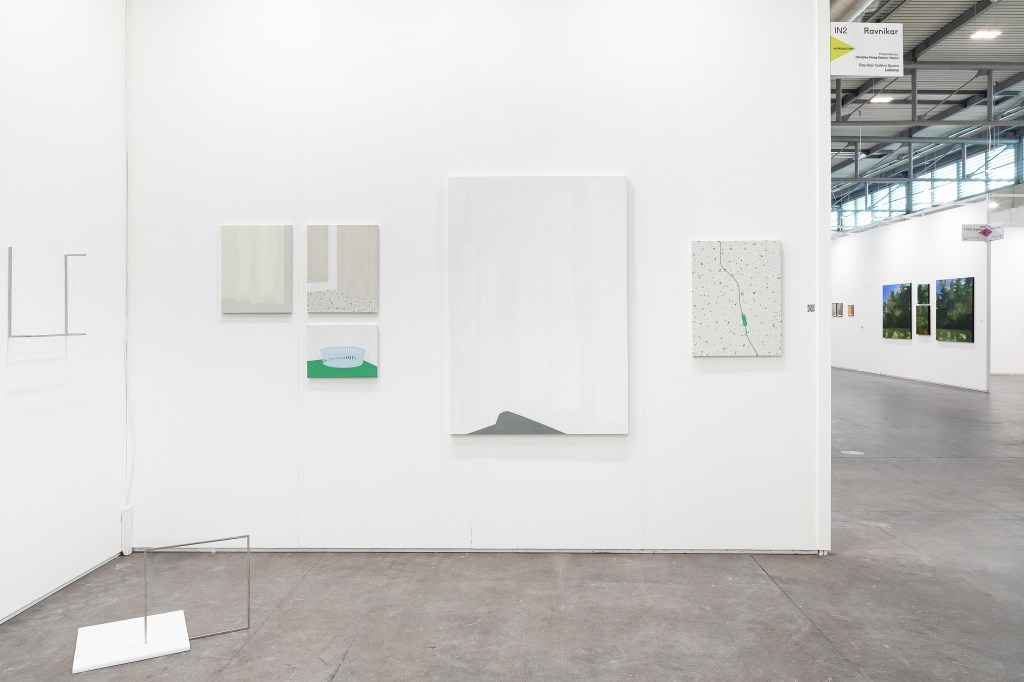
Art Verona, 2022, Verona, IT
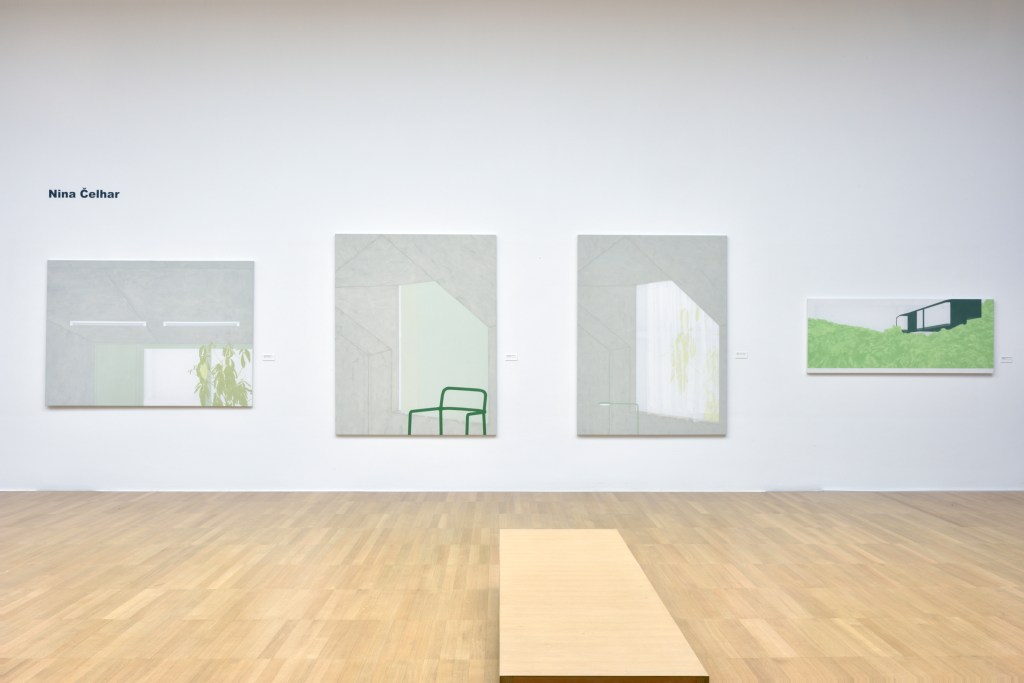
Momental–mente, Vivid Paintings, 2022, Museum of Modern Art, Ljubljana, SI
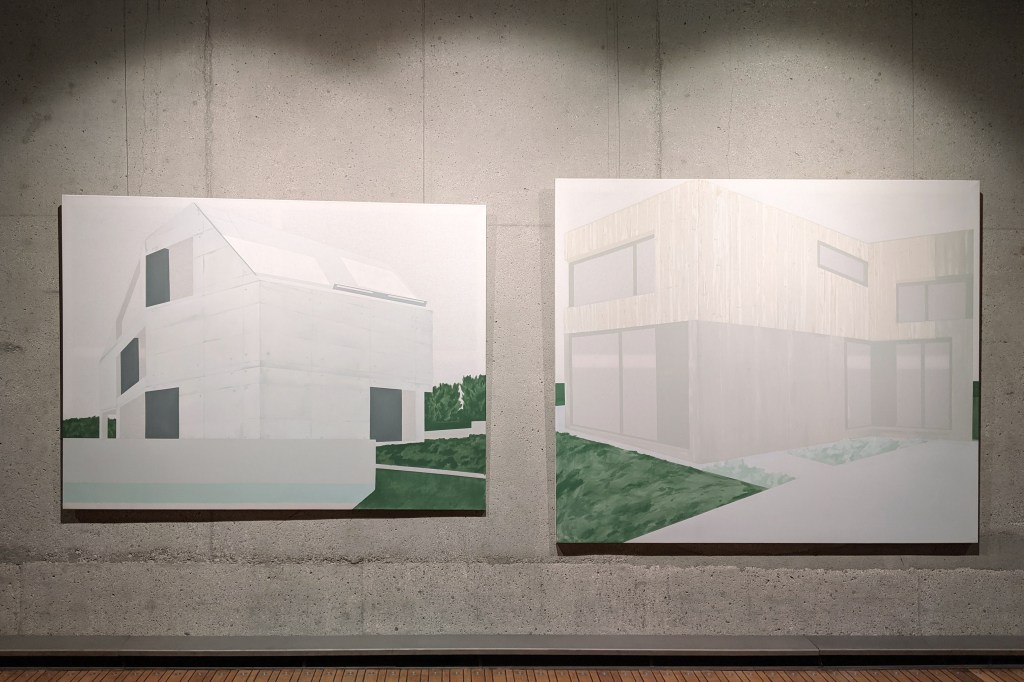
Hedonism, 2021, Gallery ‘S’, Ljubljana Castle, Ljubljana, SI
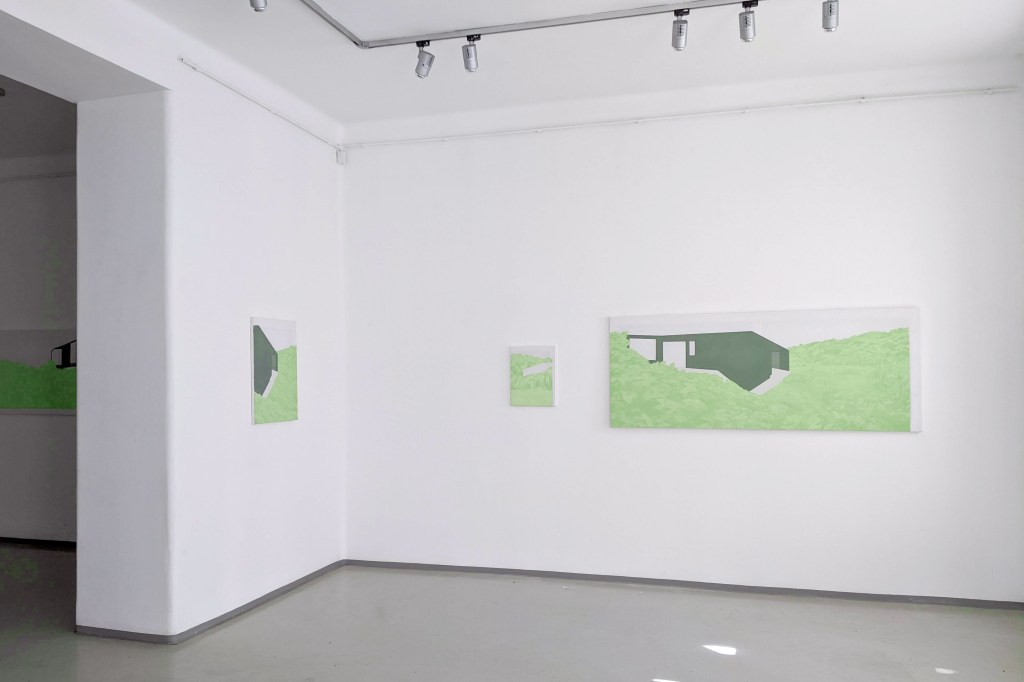
Nina Čelhar, Personal Residences, 2020, Bežigrad Galley 1, Ljubljana, SI
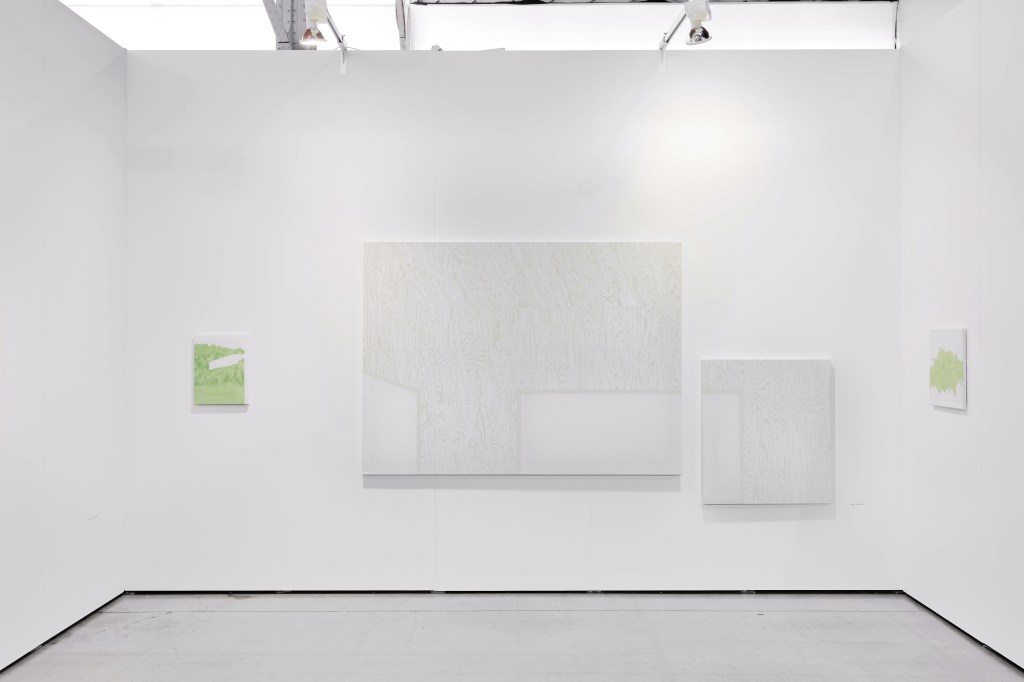
viennacontemporary, 2019, Vienna, AT
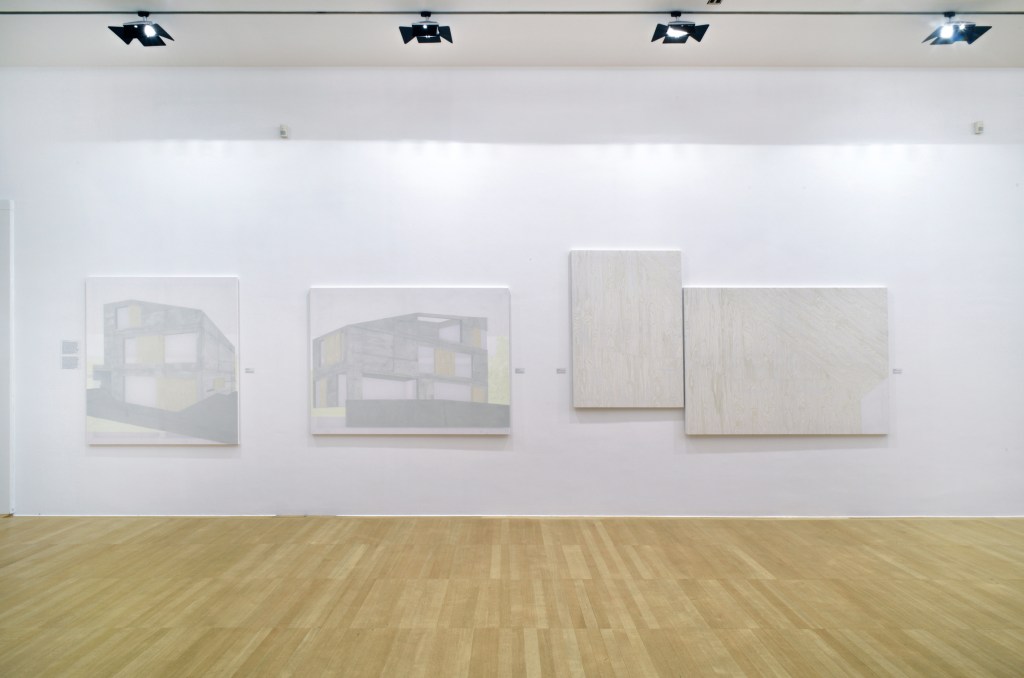
Time Without Innocence. Recent Painting in Slovenia, 2019, Museum of Modern Art, Ljubljana, SI
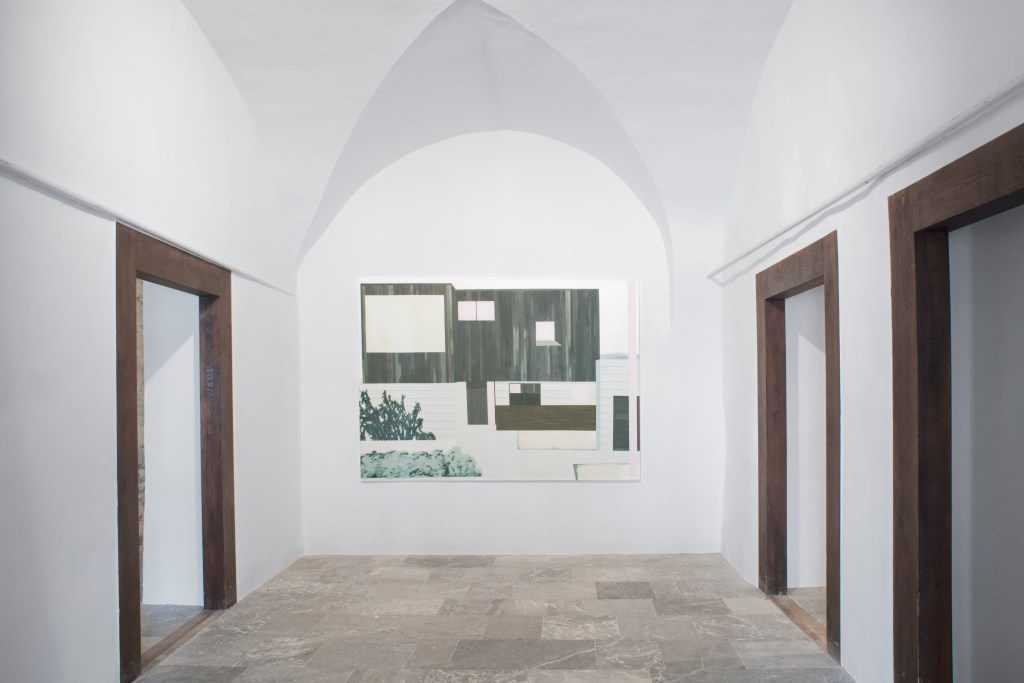
Nina Čelhar, Lulls, 2017, Božidar Jakac Art Museum ‒ lapidarium, Kostanjevica na Krki, SI
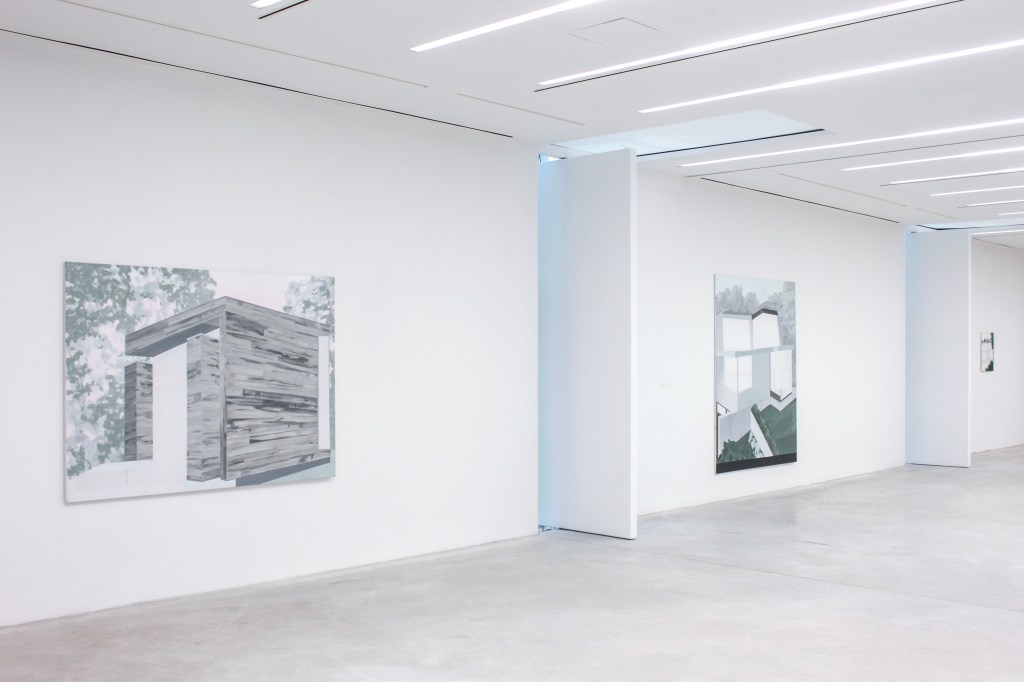
Essl Art Award CEE, Nominees’ Exhibition, 2015, Museum of Contemporary Art Metelkova, Ljubljana, SI

Nina Čelhar, Fleeting Atmospheres, 2015, UGM Studio, Maribor Art Gallery, Maribor, SI
selected exhibition views
[…] Čelhar is known as a painter of modernist architectures, painted in precisely constructed pictorial cut-outs and isolated fragments, with which she reconstructs her painterly vision based on clear surfaces, minimalist drawing, subtle textures and lucid shifts of colour and light. It is the painterly interpretation of these ambiences that forms a tension that is an expression of the contemporary residential atmosphere and its contradictions – an in-betweenness between delicate intimacy and fragility on the one hand, and cold, emptied and alienated spaces on the other. Her works are more silent than they speak. Textuality is implicit here in the images from the everyday world, it is found “between the lines”, between the gaps and cuts that need to be imagined and filled with meaning. […]
Nadja Gnamuš
for exhibition Text as Object (2024)
//
Čelhar is drawn to exploring the almost fictional concept of the ideal living space. Is there such a thing as an ideal dwelling for a contemporary human? When looking through the glossy photographs of contemporary architecture, an image of unobtainable perfection emerges—an exuberant allure of newness and freshness, promising a composed, calm, and stress-free life. Through painting, this notion of the elusive is advanced, emphasizing the complicated relationship with surroundings by employing a limited and subdued color palette combined with a delicate technique. The goal is to achieve a soft, visually evasive overall feeling, swaying between reality and the ideal.
“Zdi se mi, da je osebni prostor tisto najintimnejše, kar nam je ostalo”
interview about the exhibition Still (Waiting) Life
with Maja Kač | MMC RTV Slovenija (2023)
//
Edvard Ravnikar is an undisputed authority of Slovenian modernism and one of the central figures in the history of Slovenian architecture in general. Ravnikar significantly expanded the architect’s scope of activity, addressing the complexities and dilemmas of the modern world in the widest possible context of architecture, urban planning, art, design, history and philosophy, whilst employing the principles of syntheticism. Ravnikar’s architectural practice left indelible traces both locally and internationally, and his groundbreaking theoretical work made a permanent imprint on Slovenian architectural and artistic discourse.
Therefore, a special recognition befitting his excellence is accorded to him now, in the so-called Year of Edvard Ravnikar, with various exhibitions, discussions and other scientific events analysing Ravnikar’s architectural legacy, his often pioneering work and all-round personality. And it is this unique character that is the central theme of the EDVARD group art exhibition, which includes three new series of artworks created especially for this occasion. In formulating their artistic reflections, artists Nina Čelhar, Meta Drčar and Tadej Vaukman each with a different thematic focus-present the findings of their research into Ravnikar’s life and work, which at the same time faithfully mirror their own, distinctive artistic practices.
[…]
The exhibition is complemented by works by Nina Celhar, whose painting practice is dedicated to recreating interiors and façades, coupled with the idea of the relationship between people and architecture – including the designer and user and their mutual interaction. In researching Ravnikar’s legacy, Celhar focused exclusively on his architecture. In this case, his buildings are represented in different conditions, from viewing perspectives and angles of vision different to the ones we are ordinarily used to, consequently also affording an experience of a place completely different to the ane remembered from the familiar views of Ljubljana. The artist based her work on the photographs of some of the most distinctive architectural landmarks that still figure prominently in Ljubljana’s cityscape, including Cankarjev dom, the TR3 tower block and the residential-business complex Ferantov vrt (Ferant’s Garden), focusing solely on the carefully chosen views and details they reveal. Protruding from the Ferantov vrt façade cladding, the irregular, uneven and cross-placed bricks create a striking decorative border, and translated onto canvas acquire a completely new dimension both in terms of the texture of the material and the quality of the construction and ornamental details. In addition to an exercise in technique that was required to take on the challenge of consistently transferring architectural elements onto canvas, these also reflect a simple admiration for good, well-considered architecture. […]
Eva Simonič
for exhibition EDVARD: Celebrating the year of Edvard Ravnikar (2023)
//
GREEN, HOW I WANT YOU, GREEN
These paintings, these poetic oases, are our body’s and consciousness’s assembly points; they are also points of recurrence, of the non-rational reawakening of things, the new awakening of being. Nina’s painting therefore works against logical explanation, against theory, which is throughout essentially external, counter-natural, castrational; a mere means, doppelganger, “working in difference”; denial, interdiction of dance; putting in brackets, concealing the truth, a mask, a silhouette; the life of shadows, a mirage, non-essence. Thereby, this painting entirely rejects the old ways of thinking and any hierarchy, all differentiation. It only submits to constant inner seeking, to eternal vitalism, and to the desire for the return of the full painting body, the desire for the original figure, gesture, and form, which are only possible through “scraping off” all value-, cultural, and social mechanisms. Painting generates a space governed by aesthetical autonomy and stylistic freedom, unwavering imagination, and the liberated state of phenomenology, a space, where prehistoric visions and dreams, personal, sensual signs, meet. This results in an intuitive and extremely expressive painting, identical to the painter’s imaginational experience, where objects, gestures, and phenomena become equal to the pictorial surface. The painting becomes the production and protection of being and of all the forgotten relations, a world of self-recurrence in which nothing is lost. All is melded, fused into a single sign, which is open and comprehensible, yet already (already still) mysterious. Juxtapositions are dead, pure arbitrariness. There is no unified stance, ocularcentrism. The picture is now ecstasy and ritualistic dance, a primary union of matter and painting. Moreover, it is closer to the Eastern concept of the scattering of a thousand beings, a state of somnolence, which is the awakening-in-knowing and extreme concentration, and absence which is all of presence; the individual is no longer separated from, but rather one with nature, one with experiencing, incidence, consciousness; and, in its depth, a void comes ablaze which is fullness – a state of non-self, where each object is the same as subject, the original power and being of all things.
Nina’s painting is built on full and condensed figures, which seize the entire surface of the canvas linearly, without depth; on a linear grid of profoundly psychologically impacted signs caught in airiness, which is not dependent on the environment, but which increases with the paintings inner genesis. The painted world is thus neither far nor near, it is somehow horizontal, with no background. And yet, the images are dimensional, voluminous, as each sign and each gesture are direct – literal and at the same time polysemous. The painting becomes a way back, a path inward, a path of seeking with no aim or set direction, a journey, a delusion. It becomes a sort of avalanche of infinitesimally tiny experiences, a spontaneous, alogical discourse that never ends though it is ever beginning and recurring.
And truly, these mysterious magical images are metaphors for mental space – harmonious, universal – among them only a spiritual, psychological voyage is possible; they are irradiated with otherworldly beauty, which is not merely metaphorical, but also itself a sign; a grid of signs that are not empty but linked to the painter, his vision and hallucinations. The images we are observing are thus not allegorical, but real figures, only “inverted” and “transferred”, as they serve only pure desire.
Andrej Medved
for exhibition Painting Now! (2021)
//
Nina Čelhar’s works focus on architecture as the basic human living environment that determines, in its capacity of artificially constructed space, human existence. The fruit of human creativity and productivity, architecture is subject to humans; at the same time it conversely dictates our everyday lives and movements, in a way controlling and directing our very existence. Čelhar’s painterly representations of architecture – both exteriors of contemporary functionalist buildings and minimalist interiors – come across as elaborately refined, abstract, and semantically uncritical images. The artist takes the stand of an observer, scrutinizing spaces in all their details, noting the absence of people, although everything testifies to their presence. Čelhar creates works using the subtle and fragile technique of painting on translucent ungrounded canvas, which indicates also the deliberate testing of the medium and its expressive possibilities and limitations.
Martina Vovk
for exhibition Time Without Innocence.
Recent Painting in Slovenia (2019)
//
As the award winning artist of the biennial exhibition A Look 8 – A look at Slovenian Visual Arts at Home and all Over the World, set up last year at the Lamut Visual Art Salon of the Božidar Jakac Gallery, the painter Nina Čelhar is now presenting her independent exhibition entitled Lulls. The specifics of her work displayed at the biennial and her rather extensive opus so far, which the artist has created over just a few years, have decidedly shifted the balance in the artist’s direction.
Nina Čelhar belongs to the few visual artists, who have taken the path of freelancers without hesitation right after finishing their studies. This decision was probably affected by her profound conviction that only painting could be the source of her existence. The painter undoubtedly feels totally confident in this métier, which provides her with all creative freedom. Her certainty of this must be so strong that she does not yield under the pressure of the surroundings, but perseveres in the direction of her chosen path in these times of general conformity. The creativity of Nina Čelhar departs from the environment of today’s world’s abundance of information from the outset. She is different from the world of numerous young, trendy visual artists, who restrained to dealing with modern technologies and new media. This is why her creativity remains a sort of oasis of tranquillity, silence and a profound relationship with nature and the modern urban world, based on devoted communication with the medium of expression as such. The condition to hold this position is certainly her belief that it is personal experience, which is of crucial importance in paving her own path.
Originally, paintings by Nina Čelhar relate to the heritage of late modernism, yet it is understandable that today, at the beginning of a new century, we can trace in them certain shifts dictated by methods of modern visual art practices. Without a doubt, the artist has recognised the language of new media as a new environment, which she must be acutely aware of and include in her work, too, as today’s painter in order to achieve new painting effects. Among other things, this is reflected in the artist’s principle of initiating the act of creation, as in contrast to modernist painting, she favours concepts over a perfect formal expression. It is true, however that we will not register keen reactions to social and political events in her works, but they will reflect the painter’s current inner moods instead, which places them close to the basics of late modernism.
Nina Čelhar constructs her visual art language on foundations of a specific iconography and unique formal and aesthetic approaches. She finds specific motif inspirations in urban surroundings and nature in the first place, but not in the spirit of landscapists. Nina Čelhar is distinctly a studio painter finding her chosen motifs, as a rule, amongst reproductions of various media.
The artist’s central preoccupation is selecting and interpreting the chosen habitats. In this she is especially drawn to motifs, which evoke sensations of peace and quiet, and are potential places providing a lull at a first glance. Nina Čelhar includes in these both distant landscapes alluding to her home in Karst, where forest grounds are interweaved with rocks, and selected motifs in urban surroundings. Her foremost amongst these are depictions of interiors, above all individual sequences from her own home, including portrayals of potted flowers, which we obviously grow for our own pleasure in any case.
Thereby the artist reveals a look into the most intimate room in her home. While the central motif of her early works exposes the vicinity of the bed guiding our perspective from a height, the point of view in her latest pictures turns in the opposite direction, towards the ceiling and walls. And while the former are marked by distinctive drawing, this is now limited to a hardly noticeable pattern drowning in its own monochromy. By doing this, the painter has reduced the real to the level of the abstract. The experience of space has been totally obliterated in this way and is only re-established through the title of a picture, like for instance The Room (Plywood).
Special attention of the viewer is drawn to the painter’s selection of motifs from urban landscapes, which involve an expressly geometric design of modern architecture structures. It actually appears that we can find a synonym for a formal expression of the artist’s search for inner peace in their presence. After all, Nina Čelhar is attracted by these buildings as shapes providing – similar to a plain canvass – a number of options of interpretation. Therefore it is not unusual to find in her opus different depictions of the same building, where interpretations vary to such an extent that the viewer will hardly recognise this fact. Among other things, the painter is interested in the rhythm of façade surfaces, cracks and structures. While discussing, in interpreting the whiteness of concrete buildings, monochrome nuancing of dynamic façades, the artist focuses in her latest paintings, where the façades of houses are increasingly enhanced with wood, on composing surfaces of contrasting colours.
Surprisingly, the images of buildings by Nina Čelhar often strike us as inaccessible. They assume such character either for their unique transparency or even brilliance giving them the nature of sublimity, or conversely, as they appear like some kind of fortresses under the weight of their own mass. Undoubtedly, however this mood infuses her paintings with an enigmatic sensation.
As a rule, the artist juxtaposes her chosen minimalist buildings to the greenery of trees and bushes. She defines space through consecutive positioning or parallel layering of individual elements, thus achieving the effect of staging.
It would appear that figure has no special place in the art of Nine Čelhar. While it is present occasionally in her early works, it has soon begun to move to the edge of the canvass until vanishing from it completely, but the sense of its vicinity still remains firm, and it is fixed by a precisely guided view dictated by the painter herself.
The art of Nina Čelhar is based on the principle of contrast, among other things. It is about cohabitation of strictly geometric shapes and free or even dispersed form, animate and inanimate nature, and last but not least of white and green colours. In this sense we can recognise the artist’s tendency to include portrayals of potted flowers, which she usually juxtaposes, as a rule, to merely geometrically interpreted sequences of interior living areas.
The painter constructs her visual art expression in a highly premeditated manner. She pays special attention the choice of angle and frames, the choice of colour scales, which she emphasises with a well-weighed composition. In order to achieve the desired subtlety of her images she has focused on the selection of canvasses, among other things. Her canvass must not be made of rough linen, but of finely woven cotton, which enables her to accomplish even the most delicate structures while applying acrylics. In choosing her colour scale, which is very sparing, she usually avoids using warm colours, especially reds. This enables the artist to summon specific colour harmonies from the visual world, which create a singular atmosphere, so that it is light, eventually, that justifies the form and connects the integrity of the image.
In spite of the fact that her works have been increasingly imbued with subtle sensibility, because of which they have been usually displayed in rooms close to the so-called white cube in their character, we have decided at the Božidar Jakac Gallery to place them in one of our must “rustic” and historically significant exhibiting spaces that we call the lapidarium. Having in mind the well-known phenomenon of a single work of visual art responding differently to different environments we have anticipated that, in dialogue with the historic surroundings, it would provide a new aspect to the perception of Nina Čelhar’s opus of paintings. Indeed, facing the contrasts of the environment, we can now perceive a more strongly exposed concreteness in many of her paintings or a sort of down-to-earthness of depiction, which attempts to dominate over the otherwise prominent subtlety. The exhibiting space as such, with its four entrances, has dictated an entirely specific presentation of her works. This has made her decision to display a selection of her opus created so far the only sensible one. Thus the exhibition relates to a chronologically brief, but broad and interesting development of the author’s approaches to the search of new paths. The selected paintings by Nina Čelhar, which she created over just five years, reveal constants and shifts in her creative work, as she is persistently after continuity in her creativity, and is never satisfied with what she has accomplished.
Barbara Rupel
for exhibition Lulls (2017)
photo credit // RAVNIKAR – Marijo Zupanov | Cankarjev dom – Marijo Zupanov | Art Verona – Danilo Donzelli | viennacontemporary -David Biro | Museum of Modern Art – Dejan Habicht | Božidar Jakac Art Museum – DK
 NINA ČELHAR